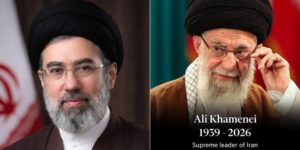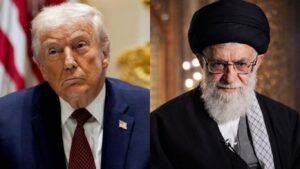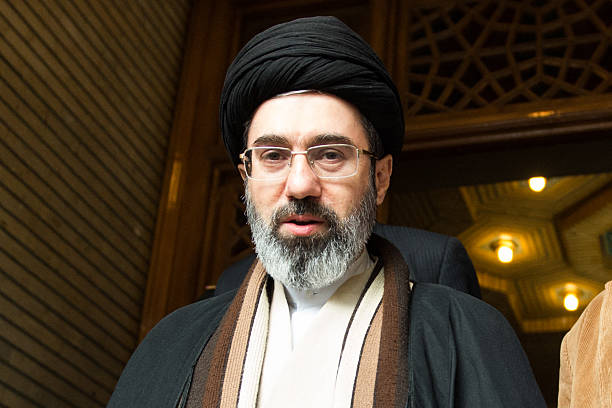
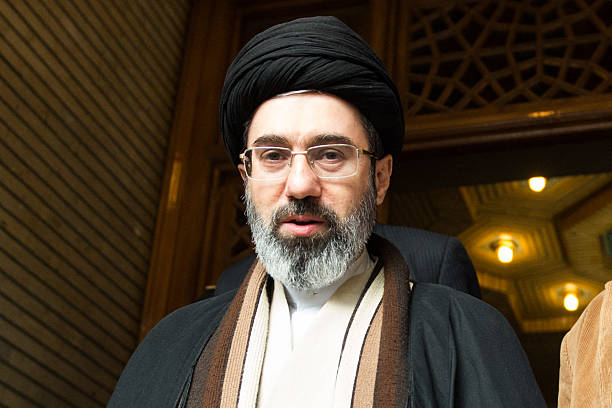
Iran has named Mojtaba Khamenei as its new supreme leader, roughly a week after his father, Ayatollah Ali Khamenei, was assassinated in a combined US-Israeli operation that sparked a regional crisis.
On Sunday, the Assembly of Experts named the 56-year-old as his father’s successor, charging him with leading Iran through the country’s most serious crisis in 47 years.
Key political figures, the powerful Islamic Revolutionary Guard Corps (IRGC), and the military were ready to support the new leader.
Iran’s President, Masoud Pezeshkian, said the appointment marked a “new era of dignity and strength” for the country. “This valuable choice is a manifestation of the will of the Islamic nation to consolidate national unity; a unity that, like a solid barrier, has made the Iranian nation resistant to the conspiracies of the enemies,” stated the leader.
Foreign Minister Abbas Araghchi also hailed the new leader. “We pledge that, in defence of the rights of the great Iranian nation, the advancement of national interests and security, and the realisation of the lofty goals of the Islamic revolution, we shall not falter for a moment,” he said in an email.
Ali Larijani, secretary of the Supreme National Security Council, who has been in charge of Iran’s security strategy since the US and Israel launched their all-out onslaught on February 28, urged unity around the next supreme leader.
Sadiq Larijani, the head of Iran’s influential Expediency Council, also joined the chorus of political heavyweights who praised the nomination, saying it underscored the need to follow in the “luminous” footsteps of Iran’s first supreme leader, Ruhollah Khomeini.
Parliament Speaker Mohammad Bagher Ghalibaf applauded the decision, adding that following the new supreme leader was a “religious and national duty,” while the defence council stated, “We will obey the commander-in-chief until the last drop of our blood.”
Mojtaba Khamenei has never competed for office or faced a public vote, but he has long been a powerful figure in the supreme leader’s inner circle, with close ties to the IRGC.
In recent years, Khamenei has been portrayed as a prospective successor to his father, who has been in power since 1989.
His appointment could signal that more hardline sections in Iran’s establishment remain in charge, as well as that the government has no willingness to reach an agreement or engage in negotiations in the short term as the conflict enters its second week.
Rami Khouri, a renowned public policy fellow at the American University of Beirut, said Khamenei’s appointment suggests “continuity,” but it remains to be seen whether the next supreme leader will push for war-ending negotiations.
Either way, he said, the appointment was “an act of defiance”. Iran is “telling the Americans and Israelis, ‘You wanted to get rid of our system? Well … this is a more radical person than his father, who was assassinated,’” he said.