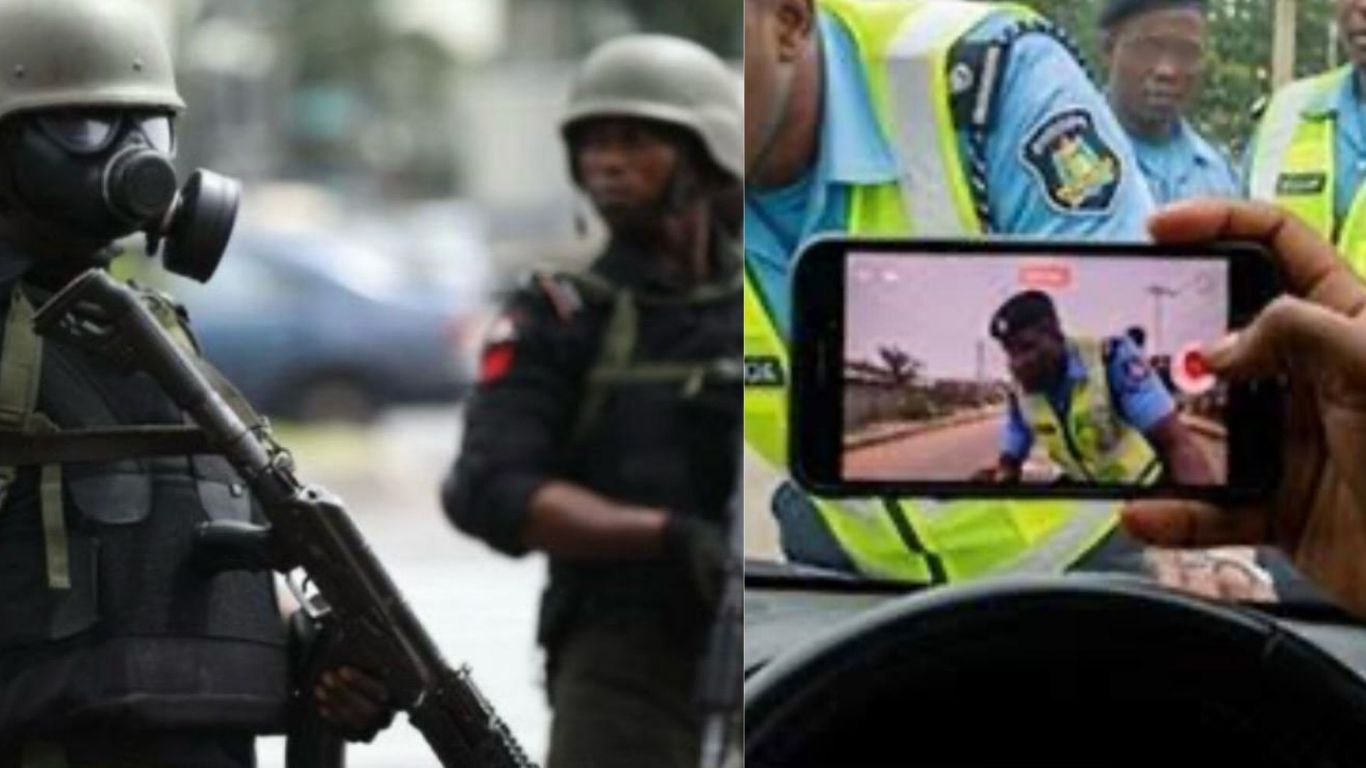
A Federal High Court sitting in Warri has ruled that Nigerians are permitted to record police officers during stop-and-search operations in public spaces, setting a new standard for police conduct.
The ruling was delivered by Justice Hyeladzira Nganjiwa on Tuesday, March 17, following a fundamental rights suit filed by lawyer Maxwell Nosakhare Uwaifo against the Nigeria Police Force, the Police Service Commission, the Attorney-General of the Federation, and the Inspector-General of Police.
Uwaifo told the court that he filed the suit after an encounter with police officers at Sapele roundabout on May 10, 2025, while travelling from Benin to Warri.
According to him, the officers stopped him, questioned him aggressively, and threatened him when he attempted to record the interaction.
He added that the situation became hostile and intimidating, forcing him to comply out of fear of being assaulted, arrested, or having his phone seized.
He also noted that due to the lack of identification and the use of an unmarked vehicle, he could not gather evidence or properly identify the officers involved.
“The entire interaction was intimidating. I could not confidently ask questions or continue recording for fear of being manhandled or unlawfully detained. I had to comply in fear and leave quietly,” he said.
The lawyer further stated that many Nigerians have faced similar harassment, intimidation, and even assault for attempting to record police officers or question their actions at checkpoints.
In its judgment, the court held that Nigerians have the constitutional right under Section 39 of the 1999 Constitution to record law enforcement officers performing public duties.
The court also ruled that police officers must wear visible name tags and display their force numbers during operations.
It declared that it is unlawful for officers to harass, intimidate, arrest, or seize devices from citizens for recording them in public spaces.
Additionally, the court stated that conducting stop-and-search operations without proper identification is unconstitutional and ordered relevant authorities to issue clear directives and enforce disciplinary measures against erring officers.
The court awarded ₦5 million in damages for violation of fundamental rights and ₦2 million as litigation costs, marking a significant step toward improving police-citizen relations in Nigeria.